Cats have a reputation for being the ultimate independent pets.
They do not need walks several times a day. They can spend hours sleeping in a sunny spot. They may disappear into another room just when you are trying to give them attention — and then suddenly appear beside you the moment you open the refrigerator.
All of this makes it easy to assume that cats are perfectly happy on their own.
But is that really true?
The answer is a little more complicated. Cats are certainly more independent than many other companion animals, and some genuinely enjoy having quiet time to themselves. But independence does not mean they have no social or emotional needs.
Many cats form strong bonds with their humans, depend on familiar routines, and benefit from mental stimulation and environmental enrichment — especially when they spend a large part of the day indoors.
So, what actually happens when the front door closes and your cat has the house to itself?
Independent Does Not Mean Antisocial
Cats evolved differently from dogs, and they do not rely on a social group in exactly the same way. That is one reason they often appear more self-sufficient.
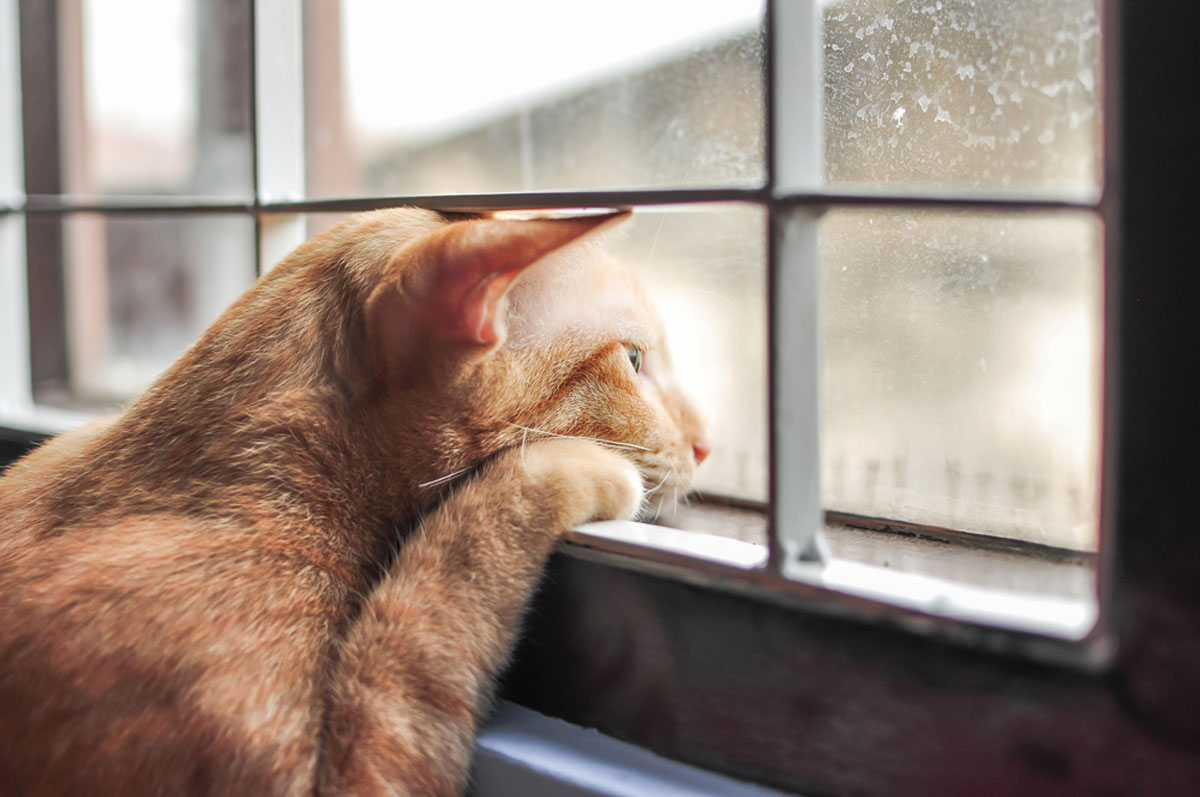
Some cats are perfectly content spending several hours alone. They may sleep, groom, look out the window, move between favorite resting spots, and seem completely relaxed when you return.
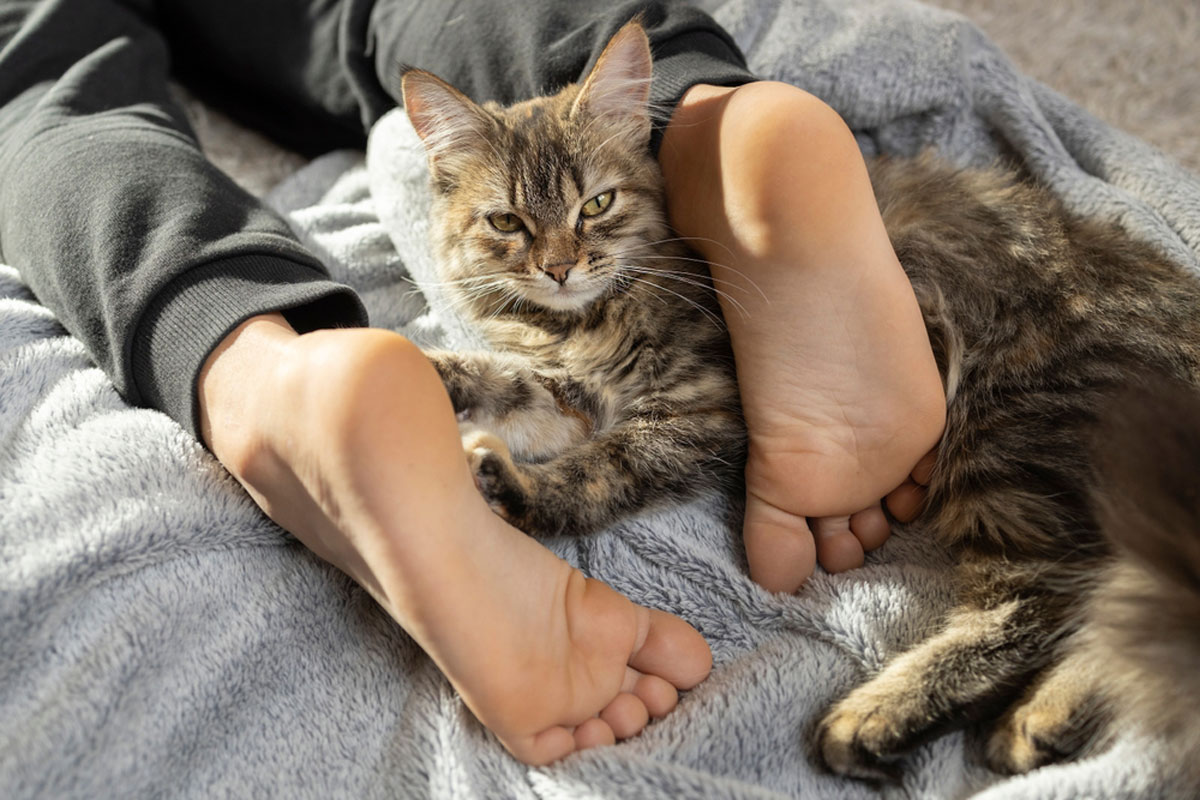
But cats can also develop meaningful relationships with people. A familiar human can become part of a cat’s routine, territory, comfort system, and social world. The fact that your cat does not follow you everywhere does not mean your presence is unimportant.
Think of it this way: your cat may enjoy solitude without necessarily wanting complete isolation.
Pro Tip: Pay attention to your individual cat rather than the stereotype. Some cats are naturally more social, while others prefer much more personal space.
📖 READ: How Do Cats Really See Humans? Bigger Cats, Parents, or Something Else?
Why Routine Matters So Much
Your morning may feel different every day. To your cat, however, breakfast at 7:00, your shower at 7:20 and the sound of your keys at 8:00 can become part of a very predictable world.
Cats often thrive on consistency. Familiar feeding times, sleeping places, play sessions and household sounds help make their environment feel safe.
This is why a sudden change in routine can sometimes affect a cat more than we expect.
A person who normally works from home may suddenly start spending eight hours at the office. A family may return to work and school after a long holiday. Someone may begin traveling more frequently.
The house has not changed, but from the cat’s perspective, something important has.
Pro Tip: If your schedule is about to change, introduce the new routine gradually when possible. Small changes are often easier to adjust to than one dramatic shift.
Is Your Cat Bored While You Are Away?
This may actually be the more common question.
A cat does not need constant entertainment, and a peaceful afternoon nap is perfectly normal. But an indoor environment that offers nothing to explore, watch, climb, scratch or investigate can eventually become monotonous.
Cats still carry the instincts of hunters. They are naturally interested in movement, changing sounds, elevated viewpoints, hiding spaces and opportunities to investigate their surroundings.
Environmental enrichment can encourage activity, provide mental stimulation and help prevent behavioral problems. Vertical spaces such as shelves and cat trees, scratching areas and opportunities for play all give cats more control over how they spend their day.
Possible signs that your cat may need more stimulation include:
- constantly demanding attention when you arrive home
- excessive nighttime activity
- scratching inappropriate places
- attacking ankles or household objects
- overeating simply because food is available
- seeming restless despite having no obvious physical need
None of these automatically means boredom, and sudden behavioral changes should always be discussed with a veterinarian. But they can be useful clues when looking at your cat’s daily routine as a whole.
Turn the Home Into Something Worth Exploring
You do not need to redesign your entire apartment to make your cat’s day more interesting.
Often, small changes work best.
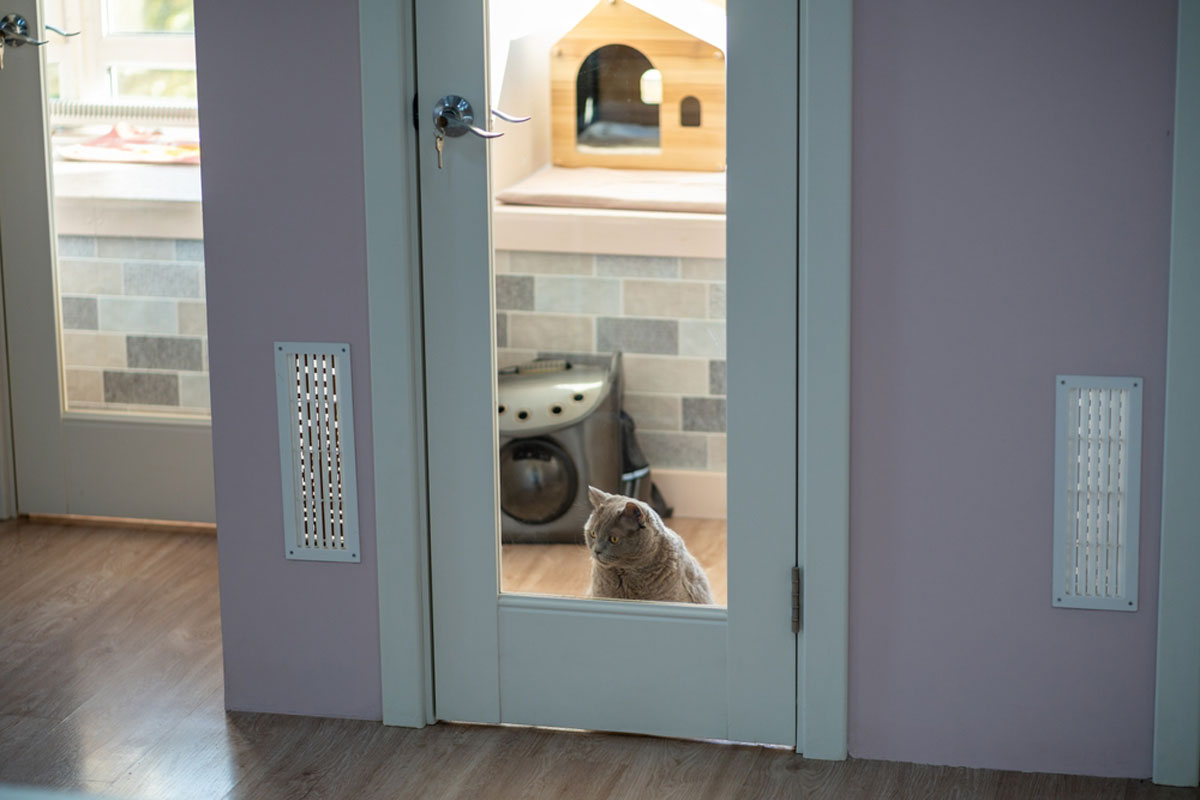
A perch beside a secure window gives your cat a changing view of birds, people, trees and light. A cardboard box becomes a hiding place. A cat tree adds vertical territory. A few toys rotated throughout the week can feel more interesting than twenty toys permanently left on the floor.
Puzzle feeders can turn part of a meal into an activity, while safe scratching surfaces allow cats to stretch, mark their space and perform a completely natural behavior.
The goal is not to keep your cat busy every second.
It is to give them choices.
A good feline environment allows a cat to decide when to rest, climb, observe, hide, scratch, explore or play.
Pro Tip: Instead of leaving every toy available all the time, rotate them. A toy that disappears for several days can suddenly become exciting again when it returns.
Give Their Inner Hunter Something to Watch
Cats are highly responsive to movement.
A bird hopping between branches, a tiny insect moving across a surface or the unpredictable movement of potential prey can immediately capture their attention.
That natural curiosity can also be encouraged safely indoors.
Depending on your cat’s personality, one may sit directly in front of the screen tracking every movement, while another may simply glance at it occasionally before settling down nearby.
Both reactions are perfectly possible.
The important thing is that screen content should be considered one part of an enriched environment — alongside physical play, comfortable resting places, scratching opportunities, human interaction and places to explore.
🐱 EXPLORE THE HAPPY CATS CHANNEL
Create a Small Ritual Before You Leave
Cats notice patterns.
That means the moments immediately before you leave home can become part of a routine too.
Rather than turning every departure into a dramatic goodbye, keep it calm and predictable.
A short play session before leaving can give your cat an opportunity to chase and pounce. Breakfast or part of a meal can follow, naturally encouraging a period of rest afterward. You can then leave the environment prepared with water, comfortable sleeping places and safe activities.
For many cats, a predictable sequence such as play → food → rest can make the beginning of the alone period feel much more ordinary.
There is no need for a long emotional farewell. Your cat may actually prefer that leaving the house is treated as something completely normal.
What About Getting Another Cat for Company?
This is where the idea that every lonely-looking cat “needs a friend” can become misleading.
Some cats enjoy feline companionship. Others absolutely do not.
Cats are not automatically happier simply because another cat lives in the same home. Their compatibility depends on personality, age, previous social experience, available space and access to separate resources.
In fact, introducing another cat purely to provide company can create stress if the resident cat prefers living alone.
Pro Tip: If you are considering adopting another cat, make the decision based on both cats’ needs and personalities — not simply because you feel guilty leaving your current cat alone.
Know When “I Miss You” May Be Something More
Most cats will not stand at the door dramatically waiting for you to return.
Their signs of discomfort can be much quieter.
Changes such as increased vocalization, inappropriate toileting, excessive grooming, reduced appetite, hiding, destructive behavior or unusual clinginess may indicate stress. They can also have medical causes, which is why a significant or sudden behavioral change should not automatically be labeled as separation anxiety.
If something feels different, speak with your veterinarian first.
Understanding your cat’s normal behavior is one of the best ways to recognize when something has changed.
📖 READ: Happy Pets Blog – Cat Behavior, Stress and Care
So, Do Cats Actually Enjoy Being Alone?
Sometimes, yes.
Your cat may genuinely appreciate a quiet house, several uninterrupted naps and the freedom to occupy the exact center of your bed without negotiation.
But that does not mean cats thrive on isolation.
They still need predictable care, mental stimulation, opportunities to express natural behaviors and meaningful interaction with the humans they trust.
The best approach is not to ask whether cats in general like being alone.
Ask what your cat needs when they are alone.
Maybe it is a window perch and a long afternoon nap. Maybe it is a puzzle feeder and several climbing spots. Maybe it is movement and nature sounds playing quietly in the background. And maybe the most important part of their day is still the familiar sound of your key in the door.
Independence is part of what makes cats so fascinating.
But behind that independence is still an animal with routines, preferences, curiosity — and its own very particular way of being connected to you.
Want more expert tips on cat behavior and care?
Join thousands of satisfied pet owners who trust our expert advice and training programs. With our Premium Package, you’ll get access to:
✅ Expert video tutorials on cat care and behavior.
✅ 24/7 support from professional trainers.
✅ Practical advice for keeping your cat active and healthy.
✅ Exclusive discounts on cat products and accessories.
Invest in your cat’s happiness today!